

Advertisement
Instructions
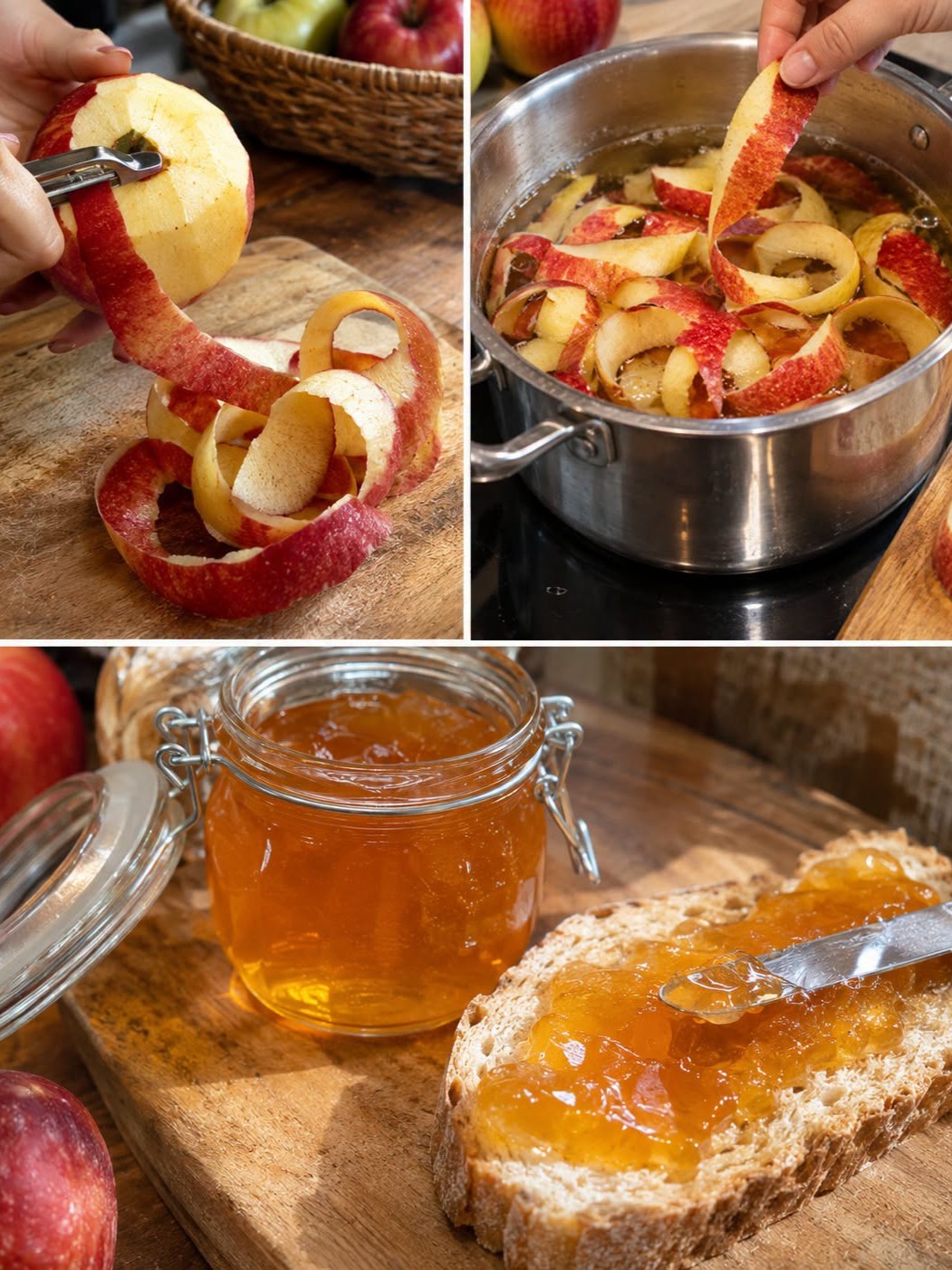
- Place the apple peels and cores into a large stock pot or Dutch oven. Add the 6 cups of cold water. Ensure the apple scraps are mostly submerged. If not, add a little more water until they are.
- Bring the mixture to a boil over medium-high heat. Once boiling, reduce the heat to low, cover the pot, and simmer gently for 45-60 minutes, or until the apple scraps are very soft and mushy. The liquid should have a noticeable apple aroma and a slight golden tint.
- Carefully strain the liquid. Line a colander with several layers of cheesecloth or use a fine-mesh jelly bag over a large bowl. Pour the cooked apple mixture into the lined colander/jelly bag and let it drip naturally for at least 2-3 hours, or preferably overnight, into the bowl below. Do NOT squeeze the bag or press the solids, as this will make your jelly cloudy.
- Measure the strained apple liquid. You should have approximately 3 cups of liquid. If you have significantly more or less, adjust the sugar proportionally (e.g., for every 1 cup of liquid, use 1 cup of sugar).
- Pour the measured apple liquid into a clean large heavy-bottomed pot. Add the fresh lemon juice and the granulated sugar. Stir gently over medium heat until the sugar is completely dissolved.
- Increase the heat to medium-high and bring the mixture to a rolling boil that cannot be stirred down. Continue to boil, stirring occasionally to prevent scorching, until the jelly reaches its setting point. This usually takes 15-25 minutes.
- To test for the setting point, either use a candy thermometer (it should reach 220°F / 104°C) or perform the 'cold plate test': place a small spoonful of jelly onto a chilled plate, let it cool for 30 seconds, then push it with your finger. If it wrinkles, it's ready. If not, continue boiling and retest.
- Once the setting point is reached, remove the pot from the heat. Carefully skim off any foam from the surface with a spoon.
- Ladle the hot jelly into sterilized canning jars, leaving 1/4 inch headspace. Wipe jar rims clean, center lids, and apply screw bands until fingertip-tight.
- Process the jars in a boiling water canner for 10 minutes (adjust for altitude). Remove jars and let cool completely on a towel-lined counter for 12-24 hours. Check seals; unsealed jars should be refrigerated and consumed within 3 weeks. Store properly sealed jars in a cool, dark place for up to 1 year.
Tips
- Use a variety of apples for richer flavor: A mix of sweet apples (Fuji, Gala) and tart apples (Granny Smith, Braeburn) will yield a more complex and balanced jelly.
- Don't squeeze the jelly bag: Patience is key for clear jelly. Squeezing the solids will introduce fine particles, making your apple peel jelly cloudy.
- Sterilize your jars properly: Ensure your glass canning jars and lids are clean and sterilized to prevent spoilage and ensure a good seal.
- Adjust sugar to liquid ratio: The pectin content in apple peels varies, so accurately measuring your strained liquid and adjusting the granulated sugar ensures proper setting.
- Watch the setting point carefully: Overcooking can result in overly stiff jelly, while undercooking means it won't set. The cold plate test or a candy thermometer are reliable methods.
Love easy homemade recipes?
Join our Facebook group for more recipes, cooking tips, and inspiration from our community.
Join Our Facebook Recipe Group →<Next --->
Advertisement
Views: 9
