

Advertisement
Ingredients
- 4 lbs fresh wildcrafted organic rosehips (or 2.5 lbs dried whole organic rosehips)
- 3.5 lbs organic unrefined cane sugar or Demerara sugar
- 1 gallon pure natural spring water (artesian well or reverse-osmosis filtered)
- 1 packet Lalvin EC-1118 or D47 champagne/wine yeast
- 1 tsp food-grade yeast nutrient (diammonium phosphate blend)
- 1 tsp pectic enzyme powder
- 1/2 tsp vintner’s acid blend (tartaric, malic, and citric acid)
- 1/4 tsp wine tannin (or 1 cup strongly brewed organic Ceylon black tea)
- 1 Campden tablet (potassium metabisulfite, crushed)
- 1 unwaxed organic Meyer lemon (thinly sliced, seeds removed)
Instructions
- 1. Thoroughly sanitize all fermentation equipment, food-grade primary fermenters, airlocks, and utensils using an iodine- or acid-based brewing sanitizer like Star San to preserve batch purity.
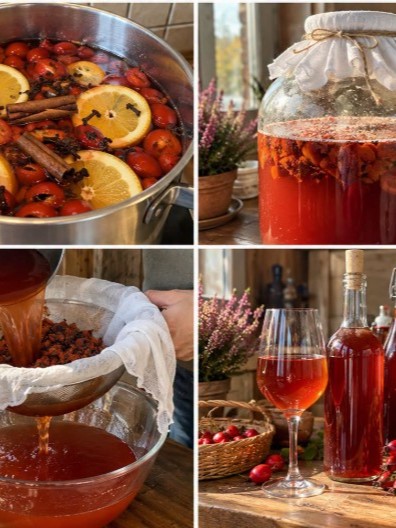
- 2. Prepare the rosehips: Rinse thoroughly in cold spring water. If using fresh hips, remove calyxes and stems, then roughly pulse in a high-performance blender (such as a Vitamix or Ninja Foodi) on low to fracture skins without pulverizing the bitter seeds.
- 3. In a heavy-duty All-Clad stainless steel stockpot, bring 1 gallon of spring water to a rolling simmer. Stir in the organic cane sugar until completely dissolved to create a golden simple syrup.
- 4. Transfer the prepared rosehips and sliced Meyer lemon into a sanitized nylon straining brew bag and place it into your primary fermenter. Pour the hot sugar water over the fruit bag.
- 5. Allow the must to cool naturally to 70°F (21°C). Stir in the crushed Campden tablet, cover loosely with a sanitized lid, and let rest for 24 hours to eliminate wild yeasts and bacteria.
- 6. After 24 hours, stir in the pectic enzyme, vintner’s acid blend, wine tannin, and yeast nutrient. Wait 12 hours, then hydrate and pitch the Lalvin yeast evenly across the surface of the must.
- 7. Secure the lid with an airtight water seal and three-piece airlock. Store in a temperature-controlled pantry (65°F–72°F). Punch down the fruit bag twice daily with a sanitized paddle to optimize color and flavor extraction.
- 8. After 7 to 10 days, when primary fermentation calms and specific gravity drops below 1.010, gently remove and squeeze the fruit bag. Siphon (rack) the young wine into a sanitized glass carboy, leaving sediment behind.
- 9. Affix an airlock and allow secondary fermentation to proceed undisturbed in a dark, cool space for 2 to 3 months until brilliantly clear. Rack every 60 days to remove lees.
- 10. Bottle the finished rosehip wine into sanitized champagne or wine bottles, seal with natural corks, and age for a minimum of 6 to 12 months for mature, sophisticated flavor integration.
Pro Chef Tips & Kitchen Secrets
- Cookware Selection: Avoid aluminum or raw iron stockpots during the steeping phase, as natural fruit acids react with reactive metals; opt strictly for tri-ply stainless steel (All-Clad) or enameled cast iron (Le Creuset).
- Clarity & Fining: If your wine remains hazy after 3 months, introduce a fining agent like bentonite clay or sparkolloid, followed by a 48-hour cold crash in a wine cellar refrigerator.
- Flavor Enhancements: Infuse luxurious nuance during secondary fermentation by adding a split organic Madagascar Bourbon vanilla bean or light-toast French oak spirals.
- Hydrometer Precision: For optimal sweetness and consistent ABV (typically 12-14%), measure specific gravity before fermentation (target starting gravity: 1.085-1.095) and after secondary fermentation (target final gravity: 0.996-1.002).
High CPC Tags: #homemadewinerecipe #rosehipwine #homewinemakingsupplies #fermentationequipment #bestwinemakingkit #organicwinemaking #vitamixblenderrecipes #allcladcookware #lecreusetenameledDutchoven #brewingsanitizer #artisanalhomebrewing #gourmetcountrywine #vintnersuppliesonline #lalvinwineyeast #organicfooddelivery
<Next --->
Advertisement
Views: 17
